


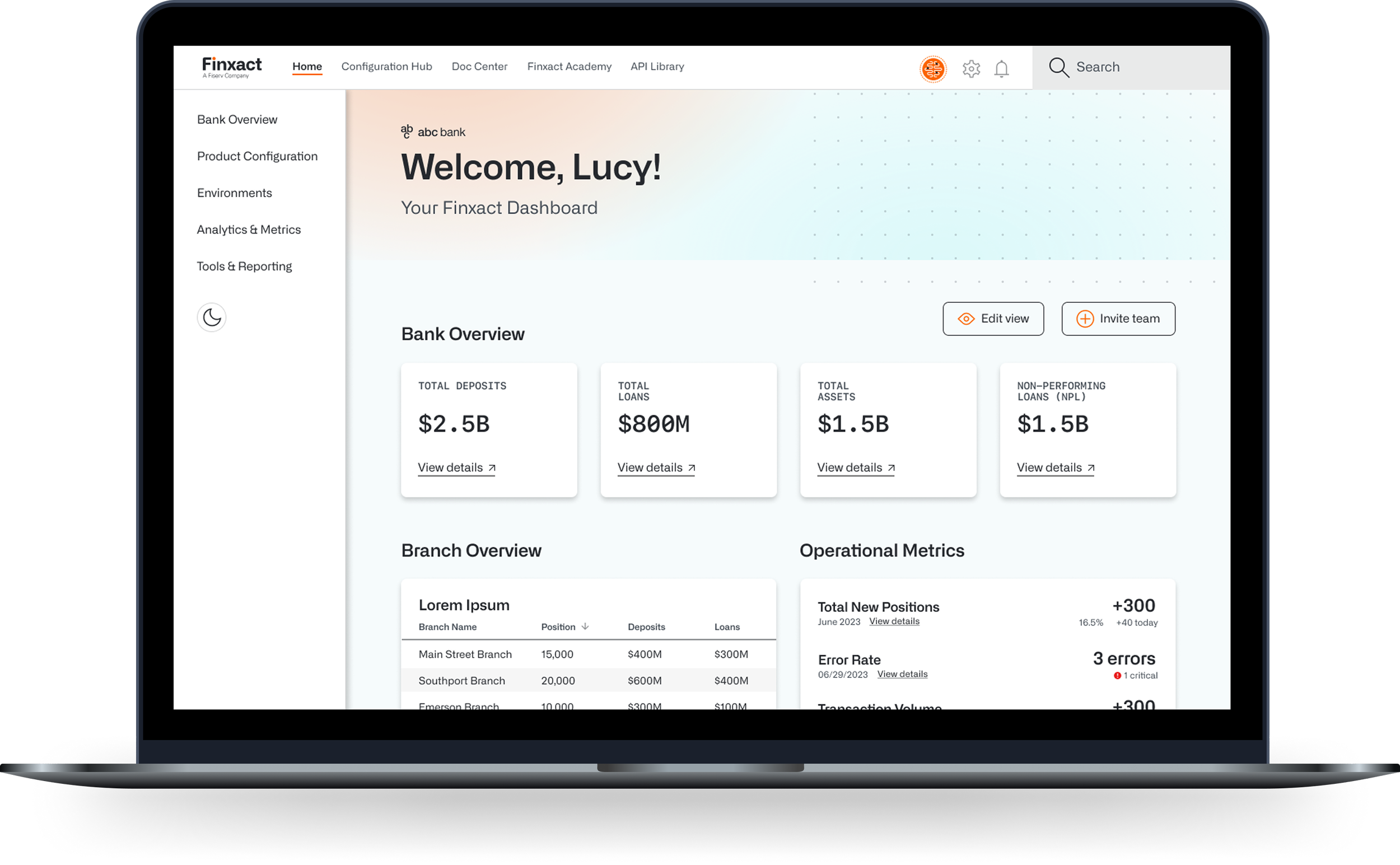
A vision-led experience used to pitch, align, and secure investment in the future of Finxact’s core banking platform.
Finxact
The Challenge
Finxact had built a highly flexible and technically advanced core banking platform—but one that was difficult to understand, explain, and sell. The product was engineered for power, not approachability, making it challenging for customers and internal stakeholders to clearly grasp its value.
Before committing to a major investment in design and development, Finxact needed a compelling way to show what the future of their platform could be—and why it was worth building.
The Outcome
A future-state experience vision that reimagined how Finxact could be explored, learned, configured, and launched. Through a narrative-driven presentation supported by future-state design, we helped align stakeholders, clarify the platform’s value, and differentiate Finxact in a competitive market—ultimately enabling buy-in for a large-scale design and development effort.
My Role
As Creative Director, I led a multidisciplinary team of designers and strategists to help Finxact define and sell their future vision. The work included in-person workshops, user interviews, experience strategy, and UX/UI design. This effort culminated in a vision presentation and supporting artifacts used to align teams and secure investment in the platform’s evolution.
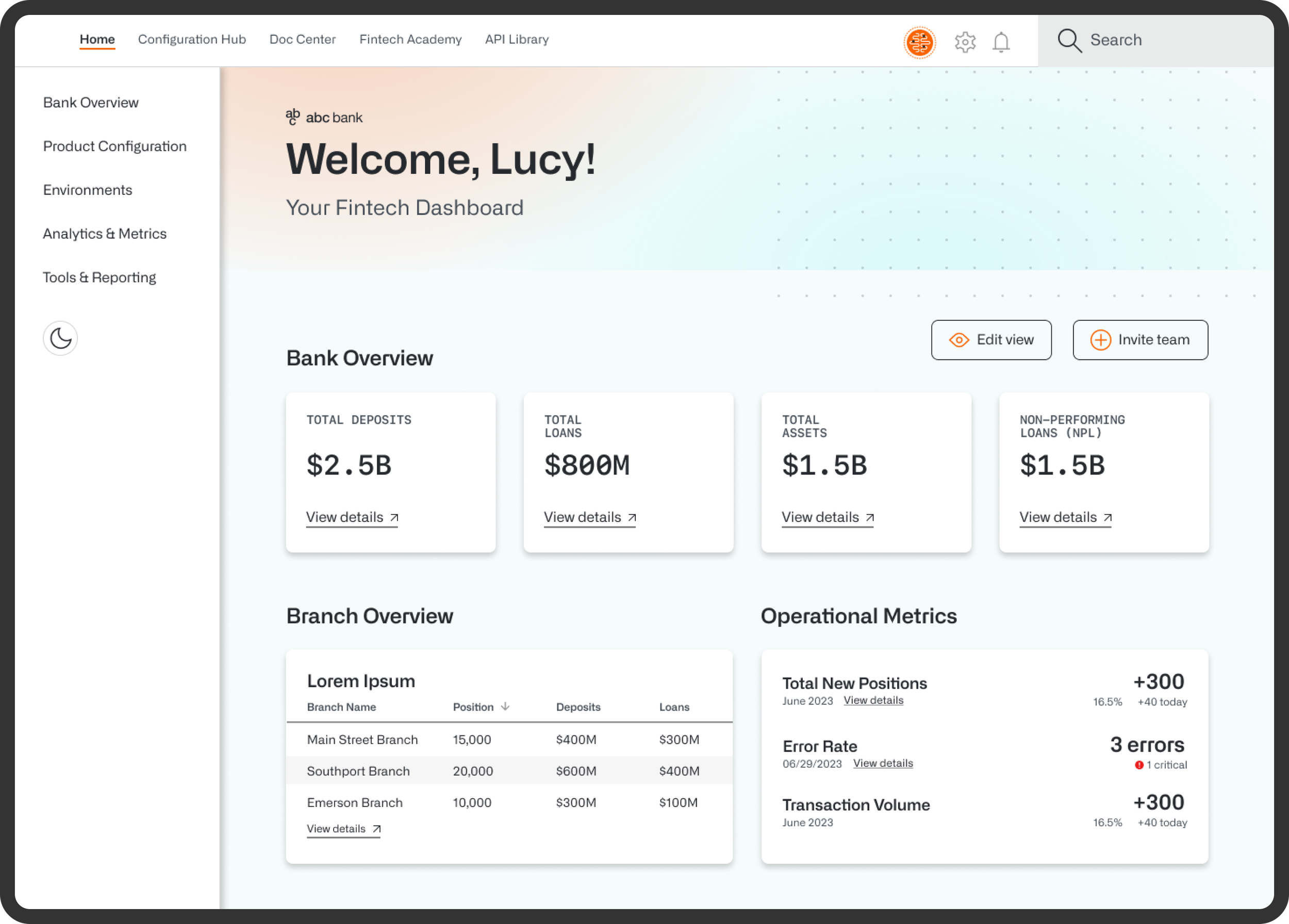
A high-level dashboard that reinforces control, progress, and confidence at scale.

Selling the Vision
Before roadmaps were approved or funding was secured, we needed to answer a critical question:
How do we help people see and believe in the future of this platform?
Rather than leading with features or architecture, we led with storytelling. The goal was not to explain how Finxact worked, but to show how it could work for real people making real decisions. This reframing helped stakeholders move beyond technical feasibility and focus on clarity, confidence, and possibility.
Meet Lucy
The opening slide of the vision presentation introduced Lucy.
Lucy was not just a persona. She was a narrative device used to ground the future in a relatable, human experience. Lucy represents a business analyst evaluating core banking platforms and making recommendations to leadership. She understands banking, but she is not an engineer. She needs to understand value quickly, explore safely, learn as she goes, and feel confident recommending the platform.
By framing the vision through Lucy’s journey, we gave stakeholders a shared lens for evaluating everything that followed.
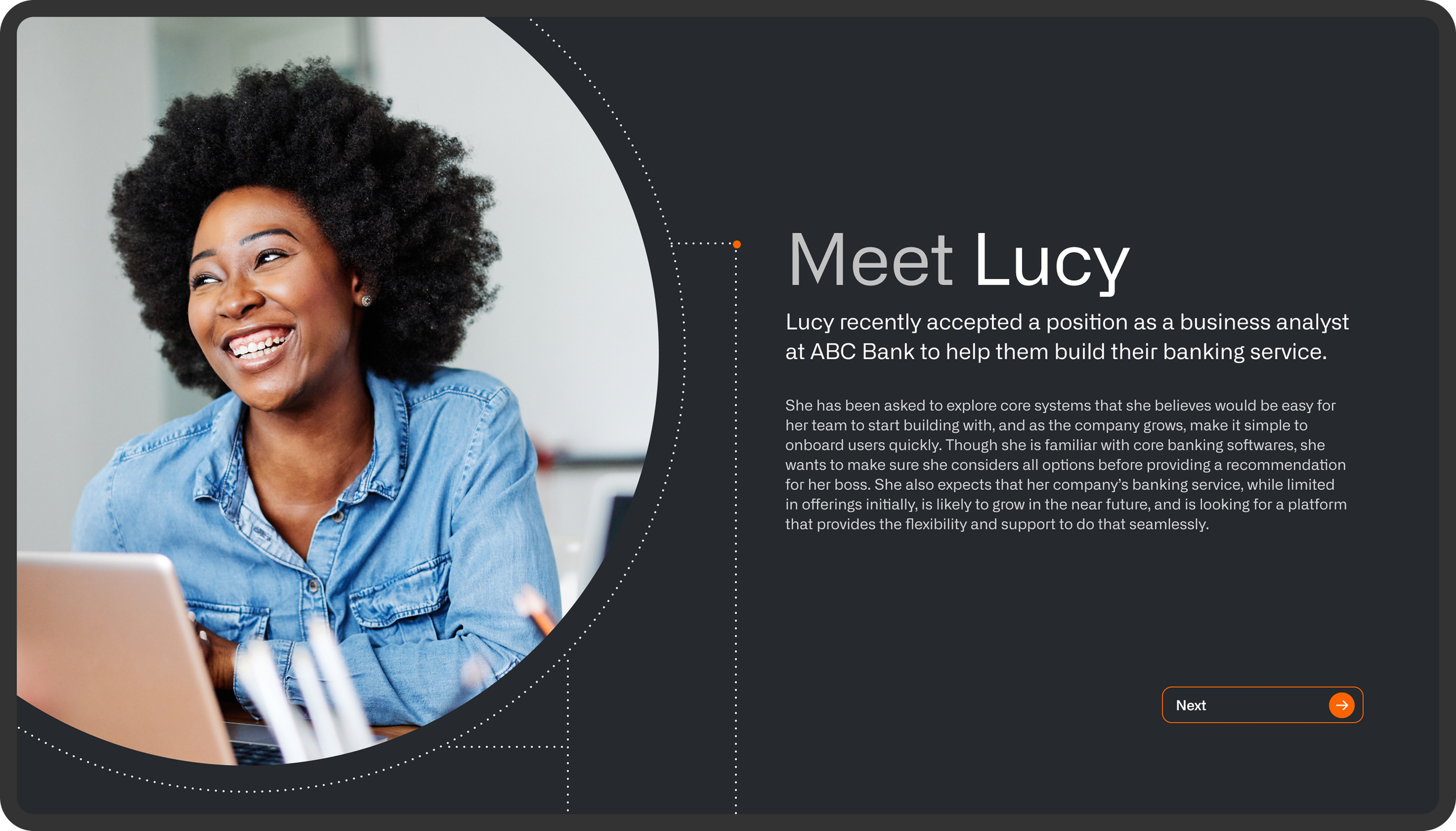
The opening slide of the vision presentation introducing a human narrative that grounded the future-state experience and aligned stakeholders around a shared point of view.
From Capability to Comprehension
Research and stakeholder workshops revealed a consistent problem. Finxact’s power was undeniable, but its complexity created friction during demos, onboarding, and evaluation.
Rather than hiding that complexity, the vision focused on revealing it progressively. Users were guided step by step, ambiguity was replaced with clarity, and learning became an integral part of the experience.
This presentation became the foundation for securing approval to move forward with a multi-million-dollar design and development effort.
Experience Principles
To ensure the vision was credible and not merely aspirational, we grounded the work in four experience principles:
Make it intuitive
Anticipate user needs and guide next stepsFocus on relationships
Design around real journeys and rolesBuild trust
Show progress, feedback, and value earlyGive control
Empower users to explore and configure independently
These principles aligned design, product, engineering, and leadership around a shared definition of success.
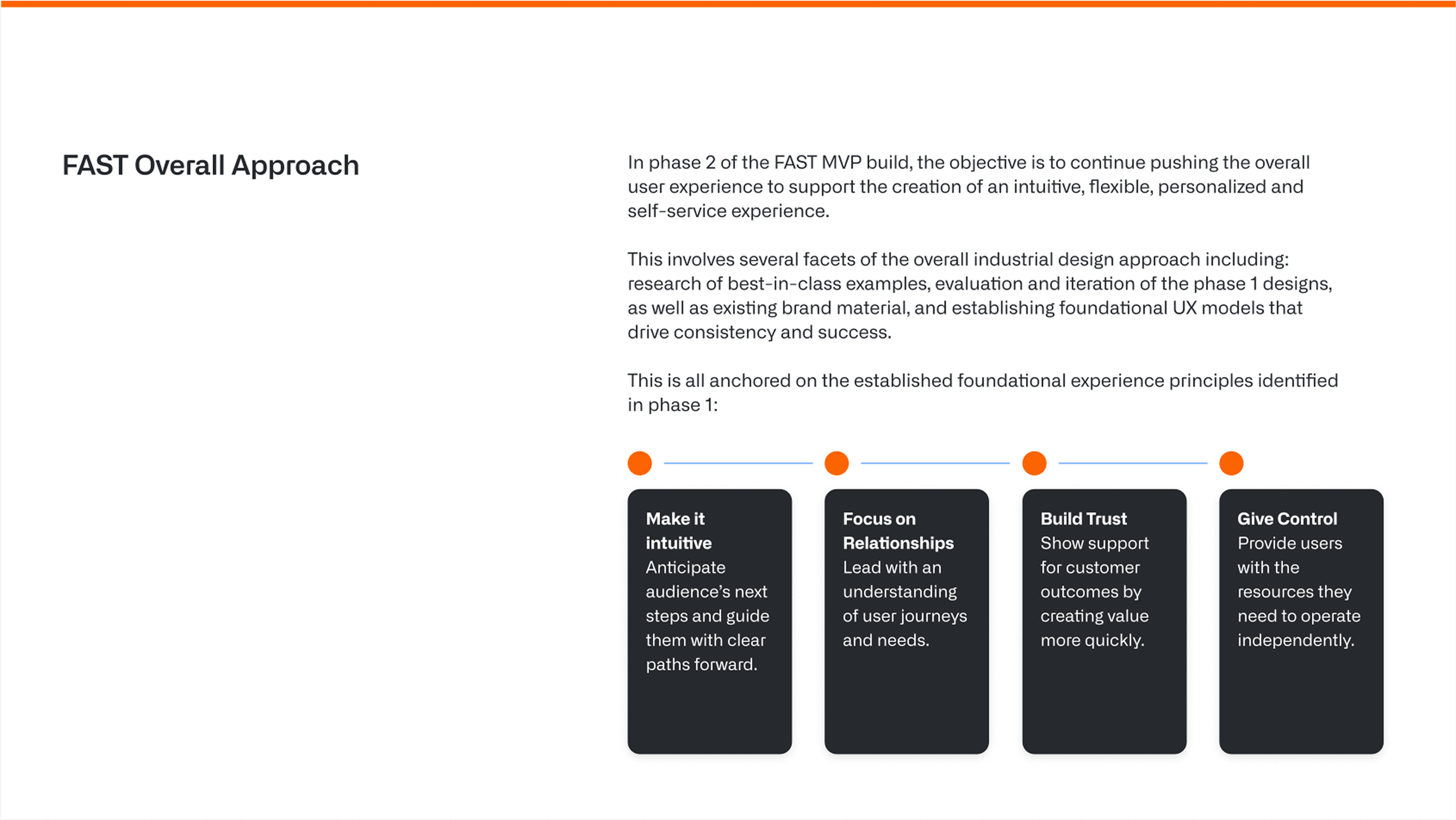
Experience principles used to align teams and ensure the future-state vision was intentional, scalable, and grounded in real user needs.
Designing for Exploration & Learning
One of the most important moments in the presentation was showing how users could start simple. Pre-configured product concepts allowed Lucy—and prospective customers—to understand what Finxact made possible before diving into full customization.
This shifted the conversation from intimidation to curiosity.
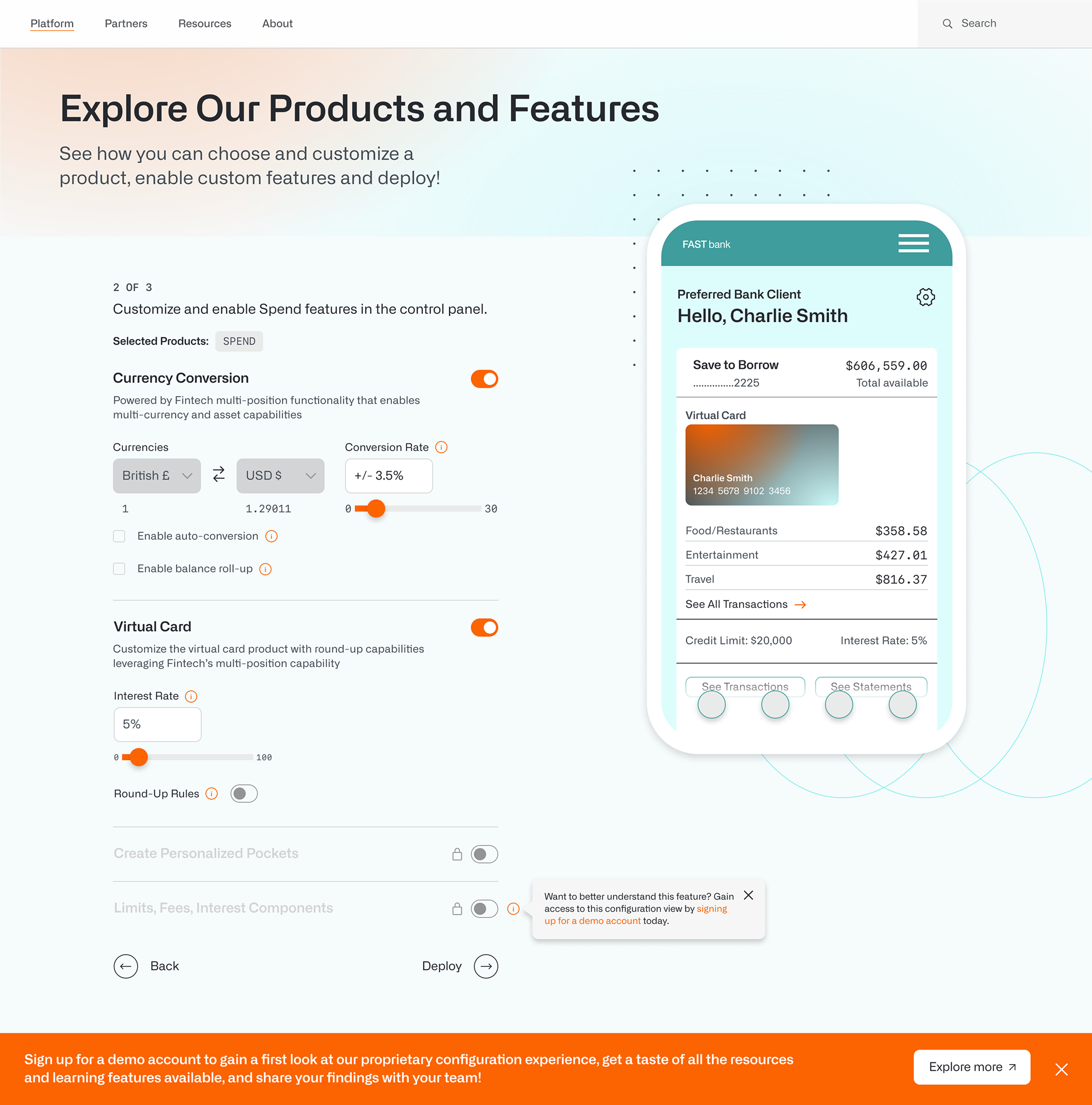
A future-state concept shown during the pitch to demonstrate how powerful configuration could feel approachable and easy to begin.
Learning as Part of the Product
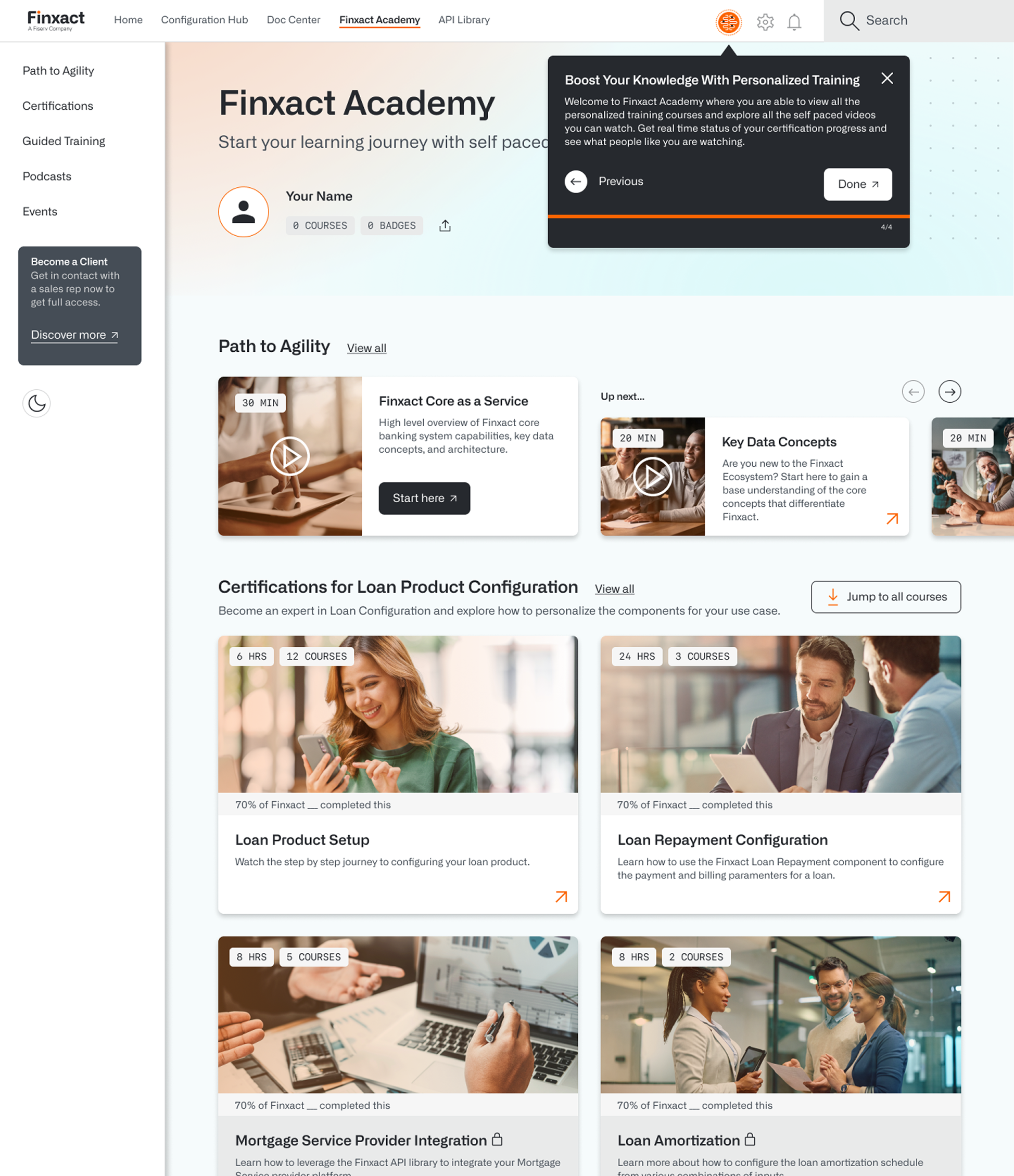
A critical insight was that learning could not live outside the platform.
The vision introduced Finxact Academy as an integrated learning experience that personalized guidance based on role and progress, appeared contextually within workflows, and reduced reliance on documentation and support. Onboarding became a strategic advantage rather than a hurdle.
An integrated learning ecosystem designed to build confidence, reduce friction, and support long-term customer success.
Clarity in Complex Configuration
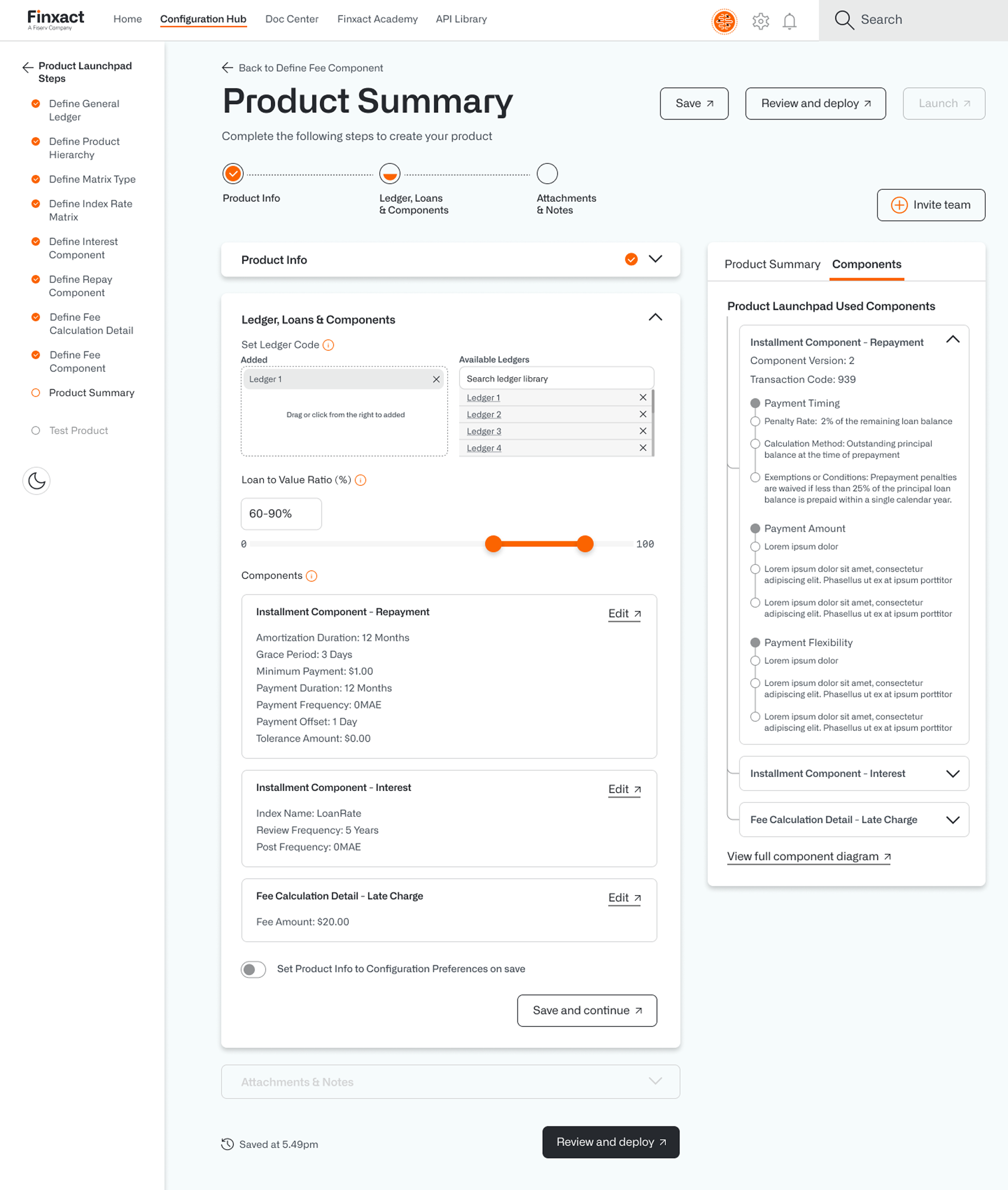
As the vision progressed, we demonstrated how even the most complex configuration workflows could feel structured and predictable. Future-state designs emphasized hierarchy, scannability, strong status signaling, and consistent patterns. This helped stakeholders see that flexibility and usability could coexist.
A complex configuration workflow redesigned for clarity, hierarchy, and confidence.
The Impact
1. Clear alignment around a shared future vision
Stakeholders across product, design, engineering, and leadership gained a common understanding of where the platform was headed and why it mattered. This reduced ambiguity and accelerated alignment.
2. Increased confidence in selling and evaluating the platform
The vision presentation and future-state designs made Finxact’s value easier to understand, discuss, and demonstrate, supporting more effective sales conversations and evaluations.
3. Buy-in for large-scale investment
By clearly illustrating the future experience, the work helped justify and unlock commitment to a significant design and development effort focused on long-term growth.
4. Reduced cognitive friction in complex workflows
The future-state experience showed how highly technical configuration could feel intuitive, guided, and approachable, shifting perceptions of the platform from intimidating to empowering.
5. Learning positioned as a strategic advantage
By integrating education directly into the experience, Finxact was positioned to onboard customers more effectively and support long-term success with less reliance on documentation and support.
6. A scalable foundation for growth
The vision established a principle-driven approach that could scale with new products, features, and customers over time.
How I Led The Work
Vision setting
Defined and articulated a clear future-state experience for a complex enterprise platform.
Strategic storytelling
Used narrative and design to build belief, not just explain features.
Systems thinking
Connected platform experience, learning, configuration, and sales enablement into a cohesive whole.
Cross-functional influence
Aligned stakeholders with different priorities around a shared direction.
Design as a growth lever
Positioned experience design as a driver of differentiation and investment.
Executive communication
Made technical complexity clear and compelling for non-technical decision-makers.
Conclusion
This work transformed how Finxact understood, communicated, and invested in the future of their platform. By leading with story, grounding the vision in real user needs, and bringing that future to life through thoughtful design, we turned complexity into clarity and alignment into action.
The result was more than a set of screens. It was a shared belief in what the platform could become and a clear path forward for building it.